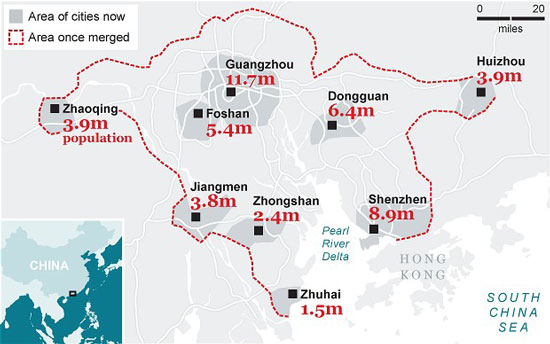
Manggong Cake (盲公饼 - literally blind-man biscuit) is a speciality of Foshan city in Guangdong province, China. It’s a traditional biscuit (despite officially named as cake) made of ground nuts and sesame seeds, first created in 1800 by a blind fortune teller… hence the name.

Foshan’s Manggong Cake which my sister bought back from
Guangzhou last week
The Manggong Cake is a popular souvenir for foreigners who visit Foshan or Guangdong… and the most well known brand is Heji (pic above). Not the tastiest biscuit I’ve had to be frank, but we got to appreciate a traditional recipe that has existed for over two centuries.
Pig innards congee (猪杂粥) is a common delicacy in Canton-based Chinese community, i.e. Guangdong, Hong Kong, Macau, and some parts of Malaysia and Singapore etc.

Pig innard congee, takeout from a shop in Sri Petaling, Kuala Lumpur
The pig innards congee in Hong Kong is a bit different from those we have in Malaysia. The pork innards (liver, kidney, intestine, lungs, stomach etc.) in Hong Kong are normally cooked fresh with the congee, whereas in Malaysia the innards are pre-cooked and seasoned before adding into the congee.
Both style has its pros and cons… but the essence of the congee is with the rice porridge itself. The smoothness and thickness of the congee is often more dictating than the pork innards. The one I had in the photo for example was a bit too watery.
Chinese and some other Asians are quite accustomed to this dish, but westerners might take this as one of those bizarre food adventure.
“Getting Home” (落叶归根; Luo Ye Gui Gen) is an award winning Chinese black comedy directed by Zhang Yang and starred veteran comedian Zhao Benshan.

Read the rest of this post »
A total of 1202 bikini-clad ladies have broken the world record for the highest number of women attending a swimsuit photo shoot.
Read the rest of this post »