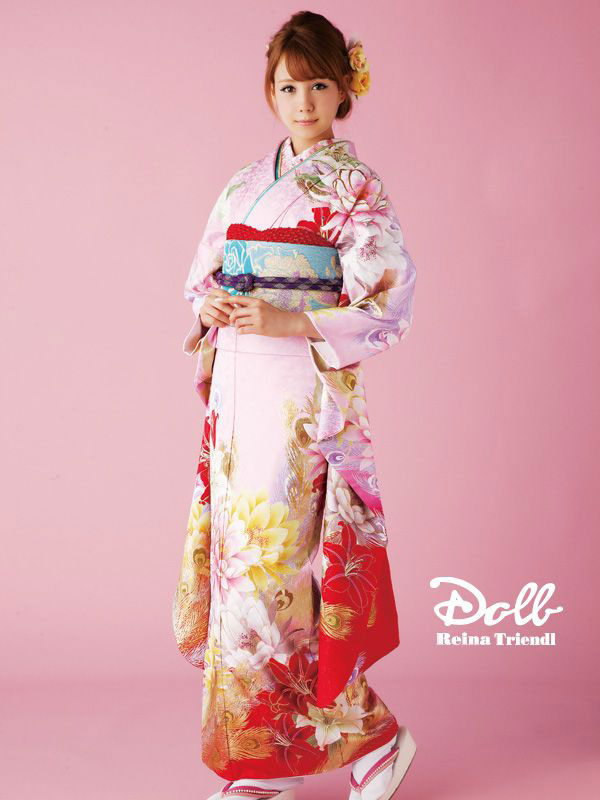
Japanese kimono maker Nishizen [Jp] has teamed up with European-Asian model Reina Triendl for a special “Reina Triendl Doll” brand.
Asian Culture, Lifestyle and Entertainment
Japanese kimono maker Nishizen [Jp] has teamed up with European-Asian model Reina Triendl for a special “Reina Triendl Doll” brand.
A Japanese commercial featuring Korean pop group KARA, advertising for convenience store Family Mart’s fried chicken for the upcoming Christmas celebration.
Fried chicken is synonymous to Christmas party in Japan. The tradition started in the 1970’s after an ingenious marketing campaign by fast food chain KFC (very popular in Japan), that fried chicken was the best alternative to the customary Xmas turkey which was scarce in those days.
The annual Saidai-ji Eyo hadaka matsuri (裸祭り, nudity festival), a ritual said to have originated in the Muromachi Period (1338-1573), was held Saturday night at the Saidai-ji Kannon-in temple in Okayama’s Higashi Ward.
Thousands of men dressed in traditional loincloth packed into the temple grounds and grappled for a pair of shingi (sacred pieces of wood), each measuring about 20cm long, and tossed from the window of the temple’s main altar.
According to local belief, those who manage to get their hands on the wooden amulet and race out of the temple’s precincts will be blessed with good fortune for the rest of the year. Info and video via Asahi.
I’ll rather have bad luck instead of facing the armpit torture, lol?
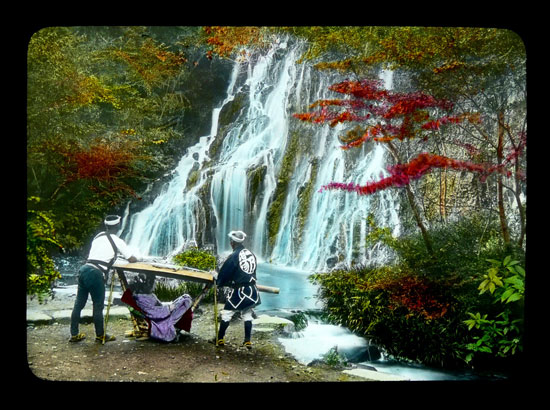
Old Japan photos – mostly in 1892-98, Meiji era – by Japanese photograher Nobukuni Enami, known professionally as T.Enami. The original images were black and white, the colour was hand-applied by the photographer and co.
A box of 28 premium Esashi apples was recently sold for a record one million yen (~US$12,000) in Iwate, Japan. Located in the city of Oshu, Esashi is known for its high quality agricultural products, especially for its rice and apples.
It’s not uncommon for premium fruits to be sold for a few hundreds US dollars in Japan; but exceptional pricing like this happens no more than once or twice a year, normally during the product’s first auction of the season where buyers would purchase it at high price, sometimes for publicity instead of gastronomical sake.
Singapore has imposed the circuit breaker measures to curb the spread of Covid-19 since early April. They announced an extension (until June 1) and some new rules a … [Read More...] about Singapore queued for last bubble tea before tightened lockdown
A cute photo series amidst the Covid-19 lockdown in Malaysia. Armed forces are present to assist the police to enforce the Movement Control Order (MCO) across the … [Read More...] about An Officer and a Gentle Cat